EDM 310 Class Blog

Contact Me

sallygajewski@gmail.com

Monday, November 4, 2013

Blog Post #11

Kathy Cassidy part 1
Kathy Cassidy part 2
Kathy Cassidy part 3


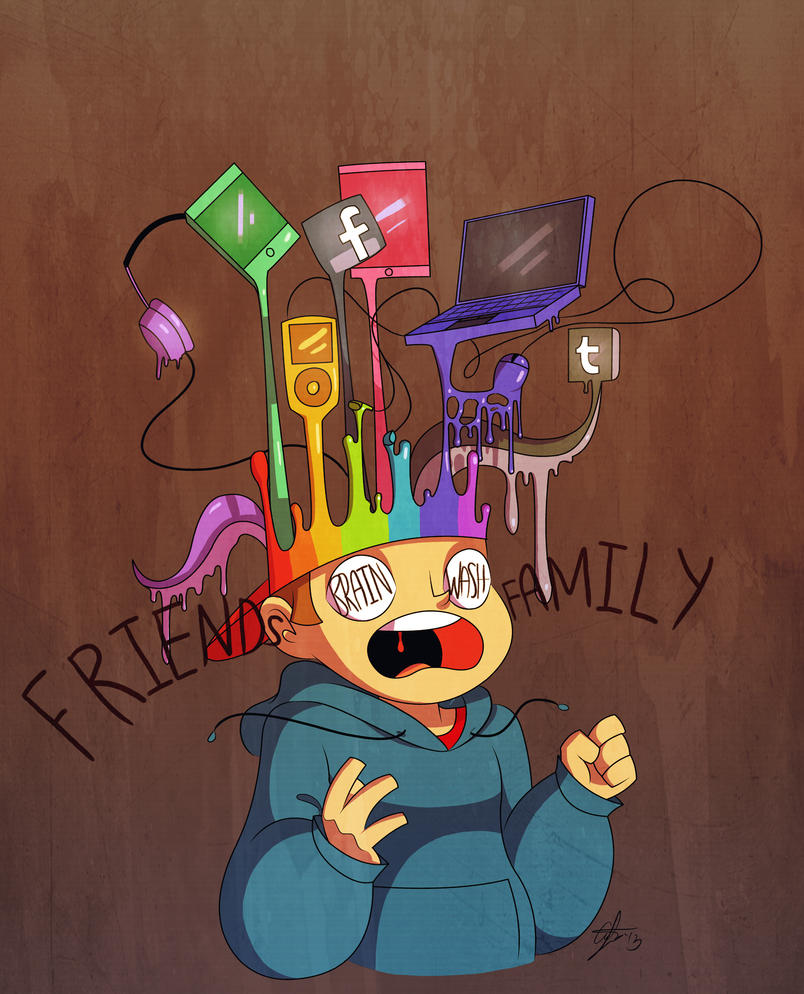
After watching the interview with Kathy Cassidy I agree with her when she says you have to use the current tools to teach the new age child. You cant use tools from 20, 10, or even 5 years ago. But giving a child reguardless of age something like a tablet and expect them not to "hack" it so they can do what they want with it. Its already been done by several thousand students the school board this has happened in has regretted it and said they was surprised when they found this out. I agree let them use the new tools but don't give them 100% free control with it. Here is a better idea why not take them out completely and go back to using real books with paper and pencils. Using all these new age tools yeah it might be faster and easier but I ask again what happens when all this stuff crashes and it can no longer be used. What then are we going to go back to using old school tools?

I have no problems with technology being used. I am not 100% against technology, but giving it to kids because their books are on it is a bit ridiculous. It's not improving our skills our national GPA's are not improving by using them. I think it's funny though that just because someone made the technology yesterday we have to use it today.

C4K

Out of My Mind Chapters 8 and 9Out Of My Mind Chapters 8 And 9
Categories: Blog
October 9, 2013 @ 11:20 AM 1 COMMENT
9
OCT


There is a famous guide dog named Endal. He can turn on the dishwasher,do the laundry and go grocery shopping(He picks up all the items). One thing you can do when you see a service dog is leave it alone. You could disturb it working or helping it’s master. I think Melody feels like it’s nice to have a younger sibling in the house,but she wishes that she can do the things Penny does. I think the author is trying to show Melody’s frustrations,how hard it is to take care of Penny and Melody and how having a dog like Butterscotch can make life for Melody a bit easier.


Hey Josh! My name is Sally Gajewski. I’m a student at the University of South Alabama in Mobile, Alabama taking a class titled EDM 310.

Hey, I agree with everything you said. I did notice a few things you could work on mainly just spacing after a comma, but other then that awesome job.


Ashleys' Blog

Hey Ashley
This is awesome i really like it and agree with it. Its very accurate and to the point.


http://medbury.ultranet.school.nz/WebSpace/474/


I am a mummy,
Fierce, stunning.

Hidden away for thousands of years.
Buried deep in a strong, protected pyramid.
Jars hold my insides.
Beware, before you enter
hidden traps all over the place.
Before I died I was a rich PHARAOH!
I was honoured.
I was adored.
I was feared.
Hieroglyphics told my story.
Amazing colours!
I'm OK?
Not where I'm supposed to be?
Now captured
behind thick, clear glass
in a museum...


Mr. Lucca,
I am a student in the College of Education at the University of South Alabama. That was very good i really enjoyed reading it. I think if your picture had not been there I would of known what you was writing about. Your a really good writer don't give up on that

Interview with a teacher

Monday, October 28, 2013

Project 14


Project Overview


Name of Project: Genetics, probability, and punnett squares

Subject/Course: Life Science Teacher: S. Gajewski

Duration: One Week Grade Level: 7th

Project Idea Summary of the issue, challenge, investigation, scenario, or problem:
Students will research basic genetics discovered by Gregor Mendel, the law of probability, and how punnett squares show the percentage of offspring ratios for dominant and recessive trait characteristics in offspring in the first generation-F1 and second generation-F2.

Driving Question
What is the basic probability of five different characteristics of the cabbage white butterfly in the F1 offspring and F2 offspring using the Mendel's basic law of genetics?

CCSS to be taught and assessed:
CC 6, 11,12

21st Century Competencies
Collaboration: Students will work in groups of three.
Creativity & Innovation: Groups will create models of offsprings
Communication (Oral Presentation)

Critical Thinking:
Groups must research probability to discover possible outcome of level one offspring to create a model.

Major Products & Performances
Group: A completed F1 offspring model of a cabbage white butterfly using five characteristics.
Individual: Each student within the groups will completely answer set one research questions. Each students will also complete set two: punnett square probability chart.

Presentation Audience
Class
Other: Group members

Entry Event to launch inquiry and engage students:
Teacher will show a video clip from Discovery Education on the cloned sheep that survived the cloning process. Teacher will ask the students "If you could be cloned, what good or bad things do you believe will happen if you were cloned?" Students will respond openly in a class discussion forum.

Assessments
Formative Assessments (During Project)
Journal/Learning Log
Notes
Checklists

Summative Assessments (End of Project)
Written Product(s), with rubric: Punnett Square probability chart
Other Product(s) or Performance(s), with rubric: Cabbage White Butterfly F1 caterpillar

Resources Needed
Materials: Paper, writing utensil, student brains, marshmallows, pipe cleaners, toothpicks, and M & M's.

Reflection Methods (Individual, Group, and/or Whole Class)
Journal/Learning Log
Whole-Class Discussion


PROJECT CALENDAR


Project: Mendel's Genetics, Probability, and Punnett Squares

Notes: Students will create a caterpillar using probability of characteristics of dominant and recessive traits.

Monday
Teacher will introduce Gregor Mendel’s work with genetics. Teacher will discuss what genetics means.
Students will complete a research assignment on basic process of trait transference from parent to offspring

Tuesday
Teacher will review basic meanings of genetics. Teacher will introduce and discuss probability using sports references. Teacher will discuss how probability functions in genetics. Teacher and students will complete a probability chart with several traits.

Wednesday
Teacher will introduce the common genetic traits of the cabbage white butterfly to students. Students and teacher will evaluate all dominant and recessive traits of this species. Teacher and students will create punnett squares to test probability of butterfly traits.

Thursday
Teacher will show a sample of a completed offspring caterpillar using 3 completed punnett squares per dominant trait of the butterfly. Students will work in groups to find the average probability of cabbage butterflies to discover what offspring will look like.

Friday
Students will use the following supplies to create their F1 cabbage butterfly offspring to display for breeding of F2 generation matting: marshmallows, pipe cleaners, toothpicks, small colored marshmallows, and M & M’s.


PBL Essential Elements Checklist


Whatever form a project takes, it must have these Essential Elements to meet BIE’s definition of PBL.
Does the Project . . .? ?

YES NO

FOCUS ON SIGNIFICANT CONTENT
At its core, the project on Genetics of Cabbage White Butterfly offspring is focused on teaching students important knowledge and skills, derived from standards and key concepts at the heart of academic subjects.

DEVELOP 21st CENTURY SKILLS
Students build skills valuable for today’s world in the science and medical fields of study, such as critical thinking/problem solving, collaboration, and communication, which are taught and assessed.

ENGAGE STUDENTS IN IN-DEPTH INQUIRY
Students are engaged in a rigorous, extended process of asking questions, using resources, and developing answers while creating a possible prospect of probability in offspring.

ORGANIZE TASKS AROUND A DRIVING QUESTION
Project work is focused by an open-ended question regarding Genetics and probability that students explore or that captures the task they are completing.

ESTABLISH A NEED TO KNOW
Students see the need to gain knowledge, understand concepts, and apply skills in order to answer the Driving Question regarding Mendel’s Law of Genetics and the process of probability between dominant and recessive traits in offspring and are able to create project products, beginning with an Entry Event that generates interest and curiosity.

ENCOURAGE VOICE AND CHOICE
Students are allowed to make some choices about the products to be created, how they work, and how they use their time, guided by the teacher and depending on age level and PBL experience.

INCORPORATE REVISION AND REFLECTION
The project includes processes for students to use feedback to consider additions and changes that lead to high-quality products, and think about what and how they are learning.

INCLUDE A PUBLIC AUDIENCE
Students present their work to other people, beyond their classmates and teacher.
Sunday, October 27, 2013

Blog Post #10

Randy's Lecture


After listening to Randy's Lecture on September 18, 2007 at the Carnegie Mellon University. I have realized that by setting goals and having dreams and the aptitude to follow your dreams. You have to do it don't worry about failing. Failing is only a small part of it all. It is not about success or failure it's all about what you have learned along your journey.

Randy talks of his childhood goals that he made and set out to do. He did them well most of them, but he says " I'm glad i didn't get all my goals, I had more fun not succeeding then I did succeeding." He said he learned more from failure example he used was he never played in the NFL.

Then he goes on to talk about how he wanted to be part of disney imagineering. He talks of all the brick walls that was placed in front of him such as his advisors. He tells and shows photos of some of his first things he created and worked with.

After watching this video I was inspired to follow my childhood dreams even more. If we could reach a mass amount of students and help them succeed in following their dreams. Can you imagine the type of world we could have? There is no telling the amount of things we could learn not only as teachers but as students. I recommended to some of my co workers to watch this and they was inspired to follow their dreams as well.

Sunday, October 20, 2013

C4T #2

When Students say They want to Change the World Listen Angela Maiers


Angela maiers is igniting a fire around what she and others are calling Genuis Hour. She is a former teacher and now is a full time education advocate, activist,and consultant. Bringing her passion-based learning, activist learning, and peer learning of show and tell through choose2matter and quest2matter programs for students, teachers, parents, and schools together.

When asked "what is your favorite part of school?" A child will answer "recess." Angela says her favorite part of her early schooling was "show and tell." Where the students get a few minutes everyday to talk, and learn from each other before they went back to sitting quietly and listening to the teacher until called on. Genius Hour takes show and tell to the next level. Showing the students how they matter not just telling them. First ask them something they want to change in the world then help them do it. Genius Hour allows class time for students to explore and act on matters they care about. Similar to the way Google lets its employees work on their pet projects 20% of their time. The students are encouraged to explore the topics that they themselves want to learn about. If you search on the key phrase "genius hour" will see the fire. Angela Maiers gets the students started by asking them what breaks your hearts about the world then what they think they can do about it.

11 months in to it and students in more then 1,500 schools and 6,000 classrooms went through the process of asking " What breaks your heart about the world and what are going to do about it ?" According to Maiers, " these young activist world-change angents and fearless leaders tackle problems and topics that range from building a library in a rural village of Ghana; raising money to build a well in communities with out water; starting and scaling a non-profit organizations support issues of education. The environment and other social causes and developing approaches to support others."

Hello. My name is Sally Gajewski and I am a student in EDM310 at University of South Alabama. I agree after reading your article and listening to your video interview i have to agree. It does make sense what she has been doing it sends a powerful message to the students. I cant wait to try this in my classroom

Saturday, October 19, 2013

Blog Post #9

In the video Making Thinking Visible Mark Church a 6th grade teacher from the International School Amsterdam. He has his students get into groups and has them think about a video they watched cally Early Human Beginnings : Origins of Human Society.

In it he has them get into groups so they can think of a headline. The students discuss what they need to say to get others to understand what it is they are trying to say with this headline. In the video he has one group read their headline which is " Why do mysteries begin and why are they important ?"

After they make the headlines they put them on the class bulletin board. Then after two units he has them check and see if the headlines are still the same.

Brian’s Video: Brian Crosby, Agnes Risley Elementary School, Sparks, Nevada, Back To the Future (17:43) (made in 2010)

Brian Crosby, an upper elementary teacher for 29 years, guides the learning in a model technology classroom in Sparks, Nevada.

TED type video. Hot Air balloon project. 4th graders. Students did not know their address, home state, country. I am not sure why the teacher presenting went over many topics he did, such as tissue flying in air, hot air balloon. I assume he was teaching thermodynamics in basic form, and giving examples/projects as a beginning and teaching the science of the project or demonstrations at a later date.

***Funding! This type of project (sending a balloon with quite a heavy payload, into the stratosphere, would take ALOT of money I would think...for 1 classroom.***

Good part of video is that the blog’s teach children “internet etiquette,” as Mr. Crosby states. The internet is known to be quite a chaotic or hostile environment. Teaching students to be polite is a good lesson to have, yet the importance of this lesson is moot.

Laura’s Part:
Bozeman Science
Mr. Paul Andersen is a high school AP Biology teacher in Bozeman, Montana. Paul Andersen has been teaching high school science for the last nineteen years. He has been teaching science on YouTube for the last three years. Paul spent the first seven years teaching all of the science classes at a small rural school in northern Montana. Paul is currently a science teacher and technology specialist at Bozeman High School.

One Word Questions
In one of his blog or or podcasts he talks about questio in education and in the classroom. Paul Andersen discusses the importance of questions in education. He briefly discusses the evolution of Wikipedia and the probable evolution of textbooks. He discusses the importance of questions and the problems posed by creating enough good questions. He really believes in question changing and evolving instead of the textbooks. Even with using the ipads with the textbooks, he says it is still just a textbook and nothing has changed. He believes learning videos, and interactive videos in school standards should be brought more into the classroom, or even at home with homework. But questions is what his main influences is on. He talks about how hard finding and coming up with good questions is for teachers. And how much work really goes into have good questions and great lessons.